Smoke and carbon monoxide (CO) alarms are the cheapest life-saving equipment in your home, but only if they work. Missing, disabled, and expired alarms are one of the most common safety problems a home inspection turns up. This guide covers how to test your alarms in 2 minutes, when to replace them, where they belong in a NYC home, and what the law requires.
Key takeaways
Test every smoke and CO alarm once a month by pressing its test button.
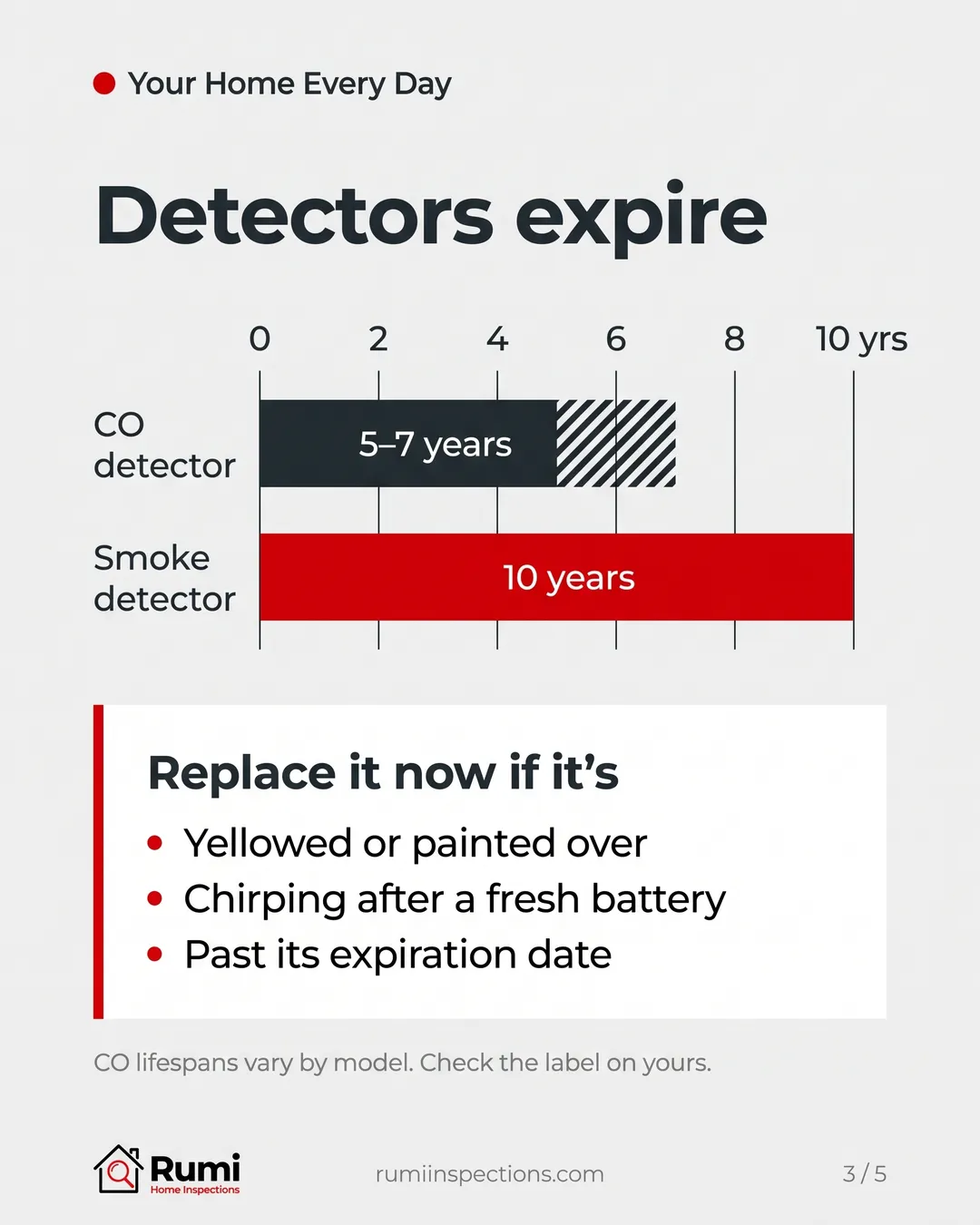
Replace smoke alarms 10 years after the manufacture date. CO alarms usually last 5 to 10 years depending on the model, and NYC's Department of Buildings advises replacing them every 5.
Put smoke alarms inside and outside every bedroom and on every level. Put a CO alarm within 15 feet of each bedroom door.
New smoke alarms sold in New York must be hardwired or powered by a sealed 10-year battery.
In NYC rentals, owners install the alarms and occupants maintain them.
Why working alarms matter
Home fires often start at night, when everyone is asleep. A working smoke alarm gives you the minutes you need to get out.
Carbon monoxide is a colorless, odorless gas produced when fuel doesn't burn completely. Boilers, furnaces, water heaters, gas stoves, and fireplaces can all produce it if they're not working or venting properly. Early symptoms such as headache, dizziness, weakness, and nausea feel like the flu, so many people don't realize what's happening. A CO alarm is the only reliable warning.
Most NYC homes heat with gas or oil, so nearly every home here needs both kinds of alarm.
How smoke and CO alarms work
Smoke alarms come in two main types. Ionization alarms respond faster to flaming fires; photoelectric alarms respond faster to smoldering fires. Dual-sensor alarms do both.
CO alarms sense carbon monoxide gas, not smoke. Combination alarms detect both in one unit.
Power: alarms are either hardwired to your electrical system, with a battery backup, or powered by a sealed 10-year battery.
Interconnection: interconnected alarms all sound together, so a fire in the basement wakes people upstairs.
Labels: look for a UL 217 listing on smoke alarms and UL 2034 on CO alarms.
The 2-minute monthly test
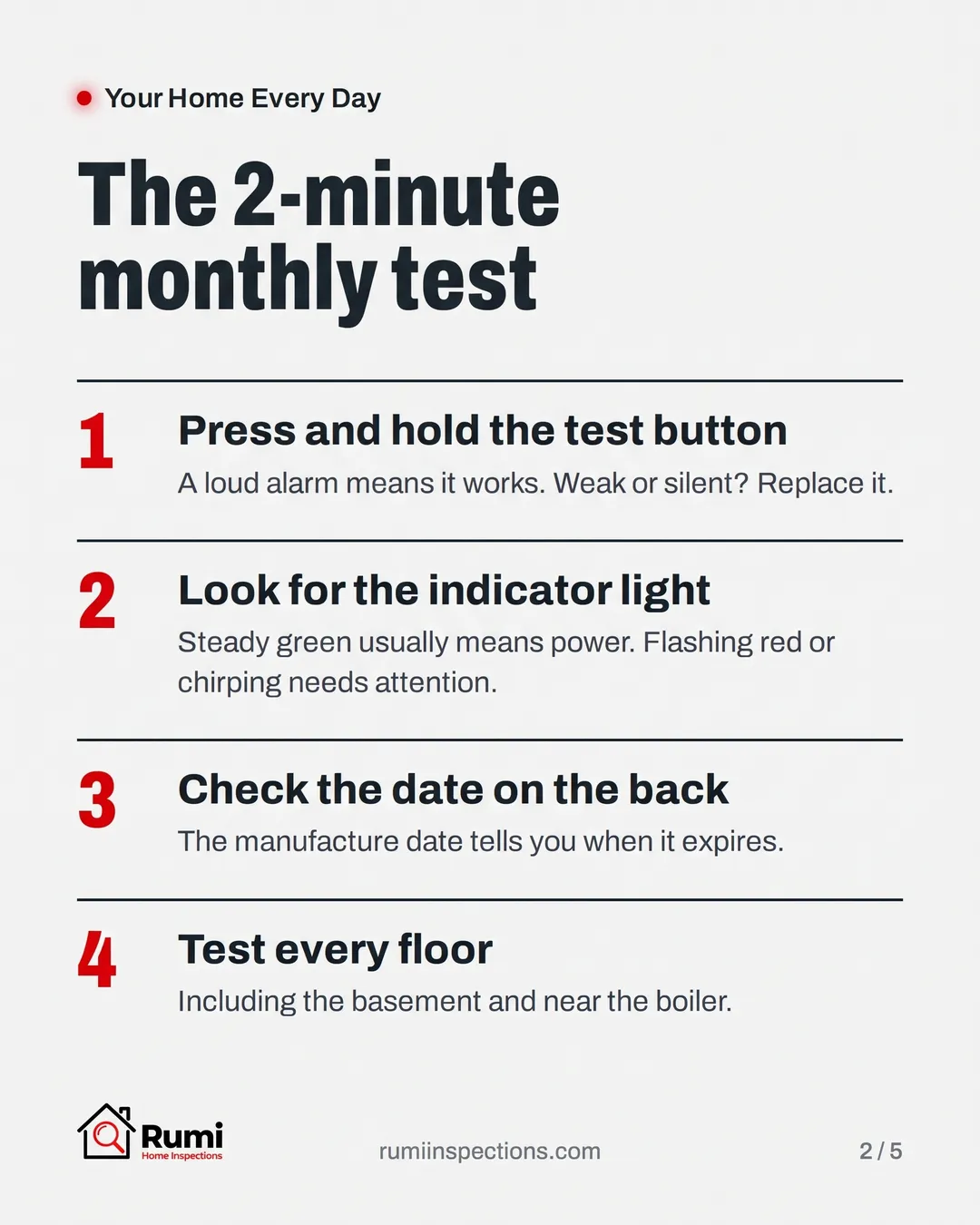
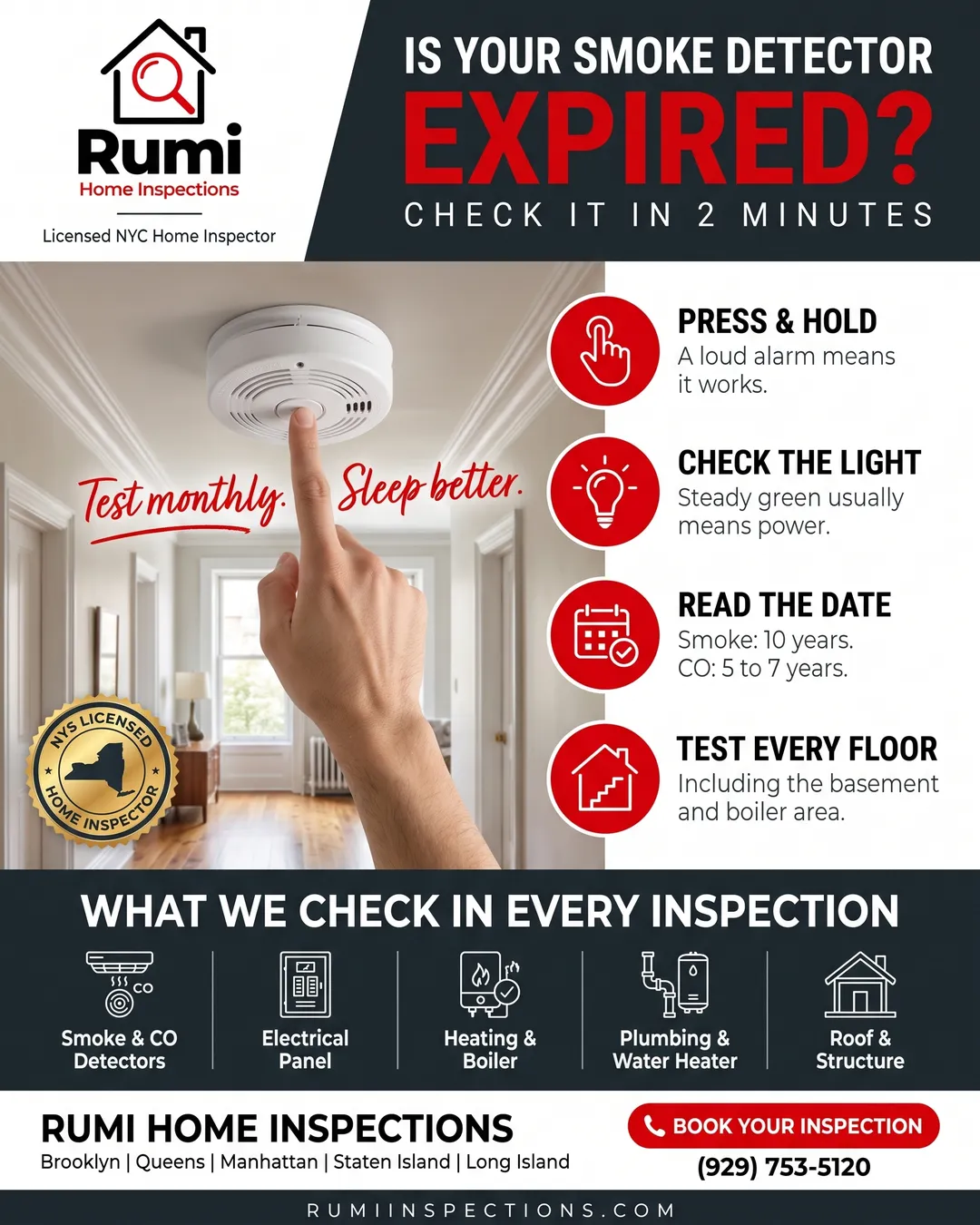
Press and hold the test button until the alarm sounds. If it's weak or silent, replace the battery or, for sealed units, the whole alarm.
Check the indicator light. A steady green light usually means the alarm has power. A flashing red light or chirping means it needs attention, so check the manual.
Read the manufacture date on the back or side of the alarm.
Test every alarm on every floor, including the basement and the area near the boiler. With interconnected alarms, every alarm should sound when you test one.
Keep them clean. Gently vacuum dust from the vents, and never paint over an alarm.
New York's Division of Consumer Protection recommends testing at least twice a year. Testing monthly takes 2 minutes and catches problems sooner.
Buying a home? We test the alarms and inspect every fuel-burning appliance during your inspection. Book a home inspection with Rumi or call (929) 753-5120.
When to replace them
Alarm
Replace after
Signs it's time
Smoke alarm
10 years from the manufacture date
Fails the test, keeps chirping, or has yellowed
CO alarm
5 to 10 years, per the label (NYC Buildings advises 5)
End-of-life chirp or display message
Combination alarm
Per the label
Replace the whole unit when either sensor expires
Replace any alarm right away if it's painted over, damaged, or still failing after a fresh battery.
Since April 1, 2019, New York has allowed only two kinds of new or replacement smoke alarms to be sold: hardwired, or powered by a sealed, non-removable battery that lasts at least 10 years. Existing alarms with removable batteries don't have to come down if they were installed to code, but their replacements must meet the new rule.
Where alarms belong in a NYC home
Smoke alarms
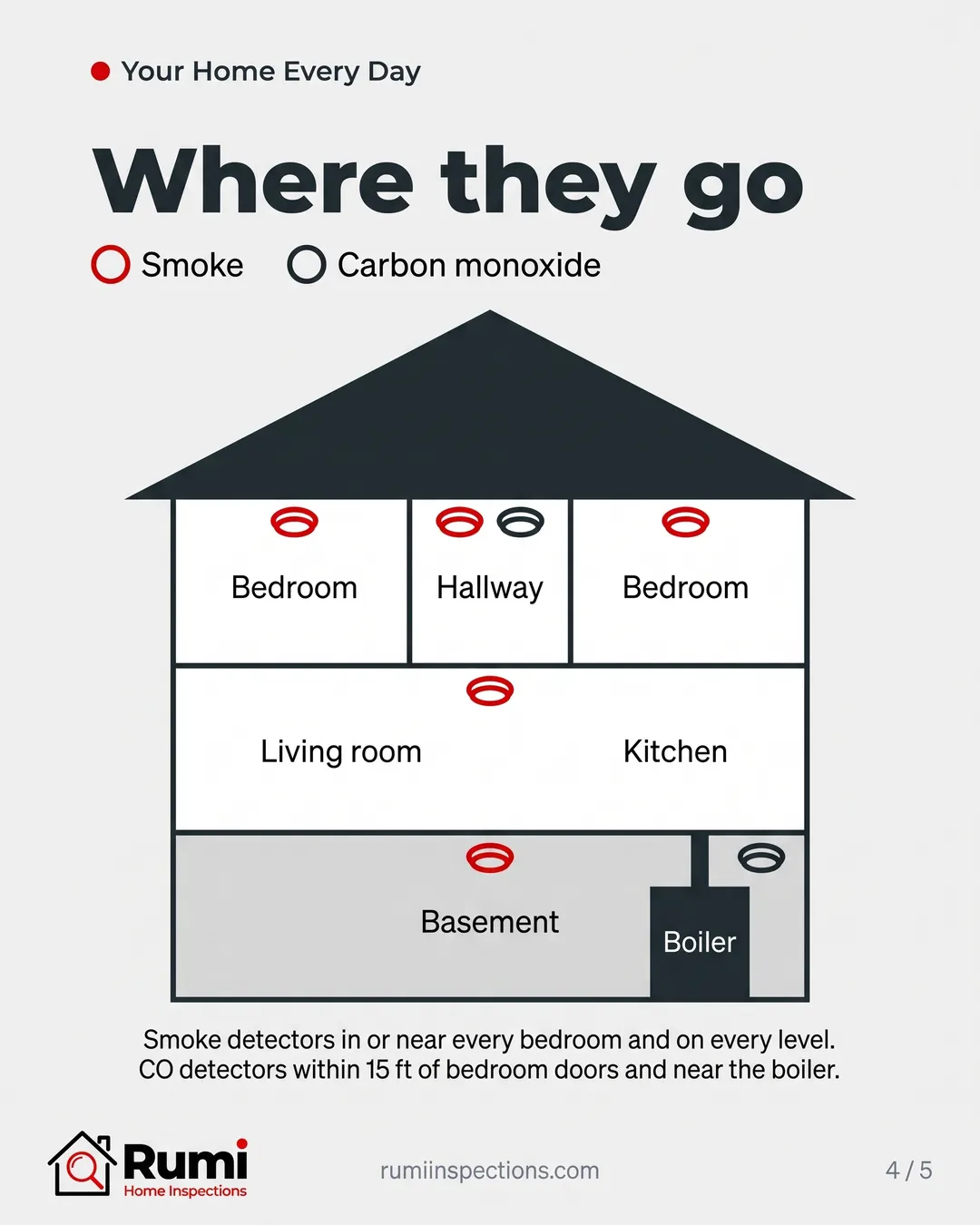
Inside every bedroom and outside each sleeping area.
On every level, including the basement.
At the top and bottom of stairways.
On a ceiling, at least 4 inches from the wall; on a wall, at least 4 inches below the ceiling.
Away from bathrooms and other warm, damp areas, and a few feet back from the stove to cut down on false alarms.
CO alarms
At least one within 15 feet of the main entrance to each bedroom.
One on every level, including the basement near the boiler or furnace.
In a 2-family home, each unit needs its own set of alarms.
NYC and New York State rules
New York State: new and replacement smoke alarms sold in the state must be hardwired or use a sealed 10-year battery.
NYC Local Law 7 of 2004: in buildings with a fuel-burning boiler, furnace, or water heater, owners must install at least one CO alarm in each dwelling unit, within 15 feet of the main entrance to each bedroom.
Who does what in NYC rentals: owners install the alarms, and occupants maintain and repair them. Owners may charge occupants $25 per CO alarm installed, payable within one year.
Amanda's Law: New York requires CO alarms in one- and two-family homes that have fuel-burning appliances or an attached garage. [VERIFY with the NYS Department of State.]
Rules change, so check HPD's and the Department of Buildings' current guidance for your building type.
What a home inspector checks
During every home inspection, Rumi Home Inspections looks at your alarms as part of a complete safety review:
Coverage: a smoke alarm in or near every bedroom and on every level, and CO alarms near the sleeping areas.
Age: manufacture dates, flagging smoke alarms over 10 years old and CO alarms past their rated life.
Function: a test of each alarm we can safely reach, plus a check of its power indicator.
Tampering: alarms that are painted over, covered, removed, missing batteries, or hanging by their wires.
Fuel-burning appliances: the boiler, furnace, water heater, and gas stove, including CO alarm coverage nearby and visible venting concerns.
Multi-family homes: alarm coverage in each unit.
A home inspection reports what we see on inspection day. It isn't a code-compliance certification, so we'll tell you when something needs a licensed electrician or a check with the city.
Problems we find in NYC homes
Problem
Why it matters
The fix
No CO alarm near the bedrooms
No warning for an odorless gas
Install one within 15 feet of each bedroom door
Painted-over or covered smoke alarm
Smoke can't reach the sensor
Replace the alarm
Alarm more than 10 years old
Sensors lose sensitivity with age
Replace with a sealed 10-year or hardwired alarm
Alarm removed after cooking false alarms
Kitchen fires go undetected
Reinstall it farther from the stove; consider a photoelectric alarm
No alarm in the basement or boiler area
Fires and CO often start there
Add alarms on every level
Missing battery or disconnected wiring
Silent in an emergency
Replace with a sealed unit or have it rewired
When to call a pro
A CO alarm goes off: get everyone outside right away and call 911. If you smell gas, leave and call 911 or your gas utility from outside.
A hardwired alarm keeps chirping after a new backup battery: call a licensed electrician.
You're buying a home: have alarms, heating equipment, and venting checked as part of a professional inspection before you close.
Frequently asked questions
How often should I test my smoke and CO alarms?
Once a month. It takes about 2 minutes to press the test button on each alarm.
Why is my smoke alarm chirping?
A chirp usually means a low battery or that the alarm has reached the end of its life. If it keeps chirping after a new battery, or if it's a sealed 10-year unit, replace the alarm.
Do I need a CO alarm if I don't have gas?
If your home has any fuel-burning appliance, including oil heat or a wood fireplace, or an attached garage, yes. Even in an all-electric home, a CO alarm is inexpensive protection.
Hardwired or battery-powered: which is better?
Both are acceptable. Hardwired, interconnected alarms sound together throughout the home. Sealed 10-year battery alarms are easy to install and keep working during a power outage.
Who is responsible for alarms in a NYC rental?
The owner installs them, and the occupant maintains them. Report a broken alarm to your landlord in writing.
Can I replace an old alarm with the same removable-battery model?
No. New smoke alarms sold in New York must be hardwired or powered by a sealed 10-year battery.
Need a second set of eyes?
Rumi Home Inspections checks every smoke and CO alarm during a full home inspection, along with heating, electrical, plumbing, roofing, and structure. Every inspection includes a same-day, photo-rich report, and you can add radon testing, a termite inspection, or infrared imaging. See a sample report.
Licensed NYS home inspector serving Brooklyn, Queens, Manhattan, Staten Island, and Long Island, with service in English and বাংলা.
Book a home inspection in Brooklyn, Queens, and across NYC or call (929) 753-5120
1088 Liberty Ave, Brooklyn, NY 11208
Sources
Need a Home Inspection?
Rumi Home Inspections LLC provides professional inspections with same-day reports.
Book an Inspection